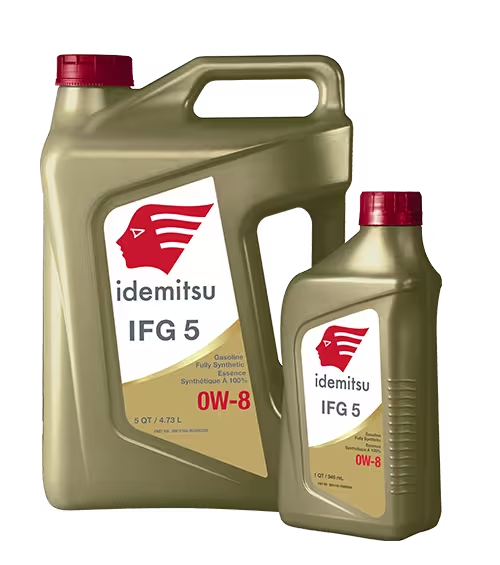
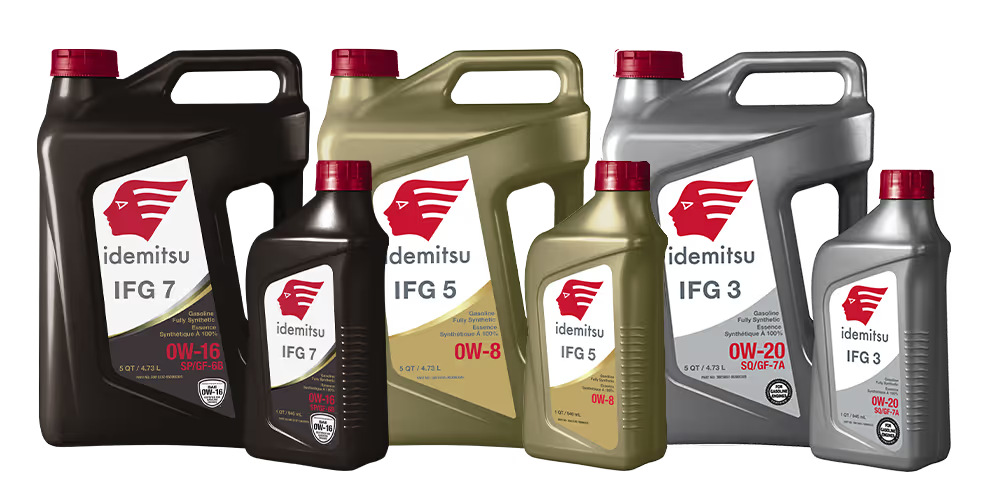
Trusted performance through precision tailored lubricants.

Idemitsu IFG engine oils were perfected by taking full advantage of the latest technology and 110+ years of oil expertise.
Precision care for wherever life takes you.

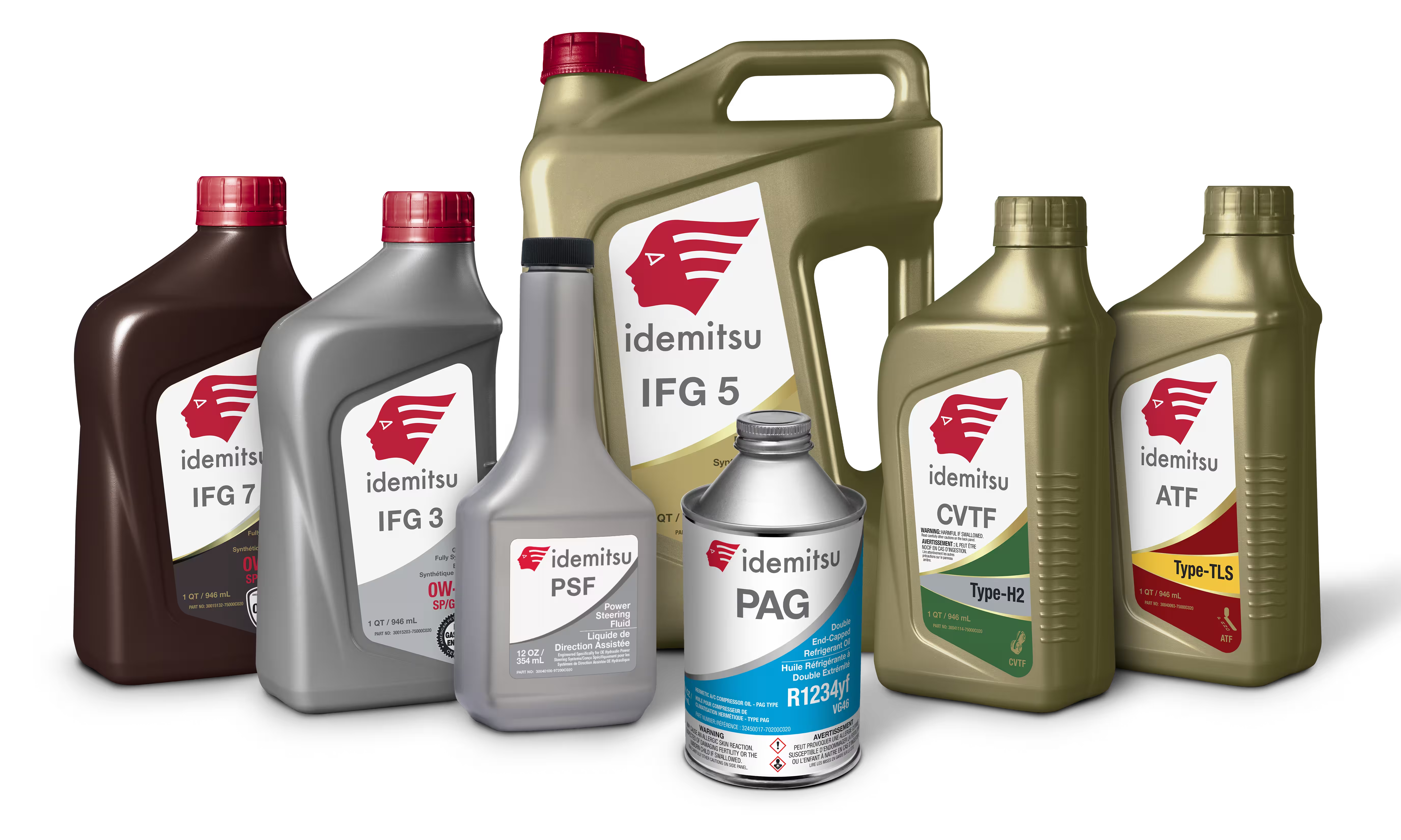
Idemitsu’s precision engineered lubricants are specifically made to care for your vehicle.
Trusted by OEM Manufacturers for Over 65 years.

Idemitsu's lubricants are the factory fill choice for millions of Japanese OEM vehicles produced worldwide.

Products to meet your industrial manufacturing requirements

Idemitsu caters specialized lubricant products, such as quench oils, for industrial machinery and power generation applications.

Gain The Advantage

Perfectly Matched Protection

Discover our range of specialized lubricants, each designed to provide the ideal protection and performance for your specific equipment and conditions.

ABOUT IDEMITSU

Over 110 Years of Experience and a Leading Asian OEM Supplier

The innovative lubricant blending facility

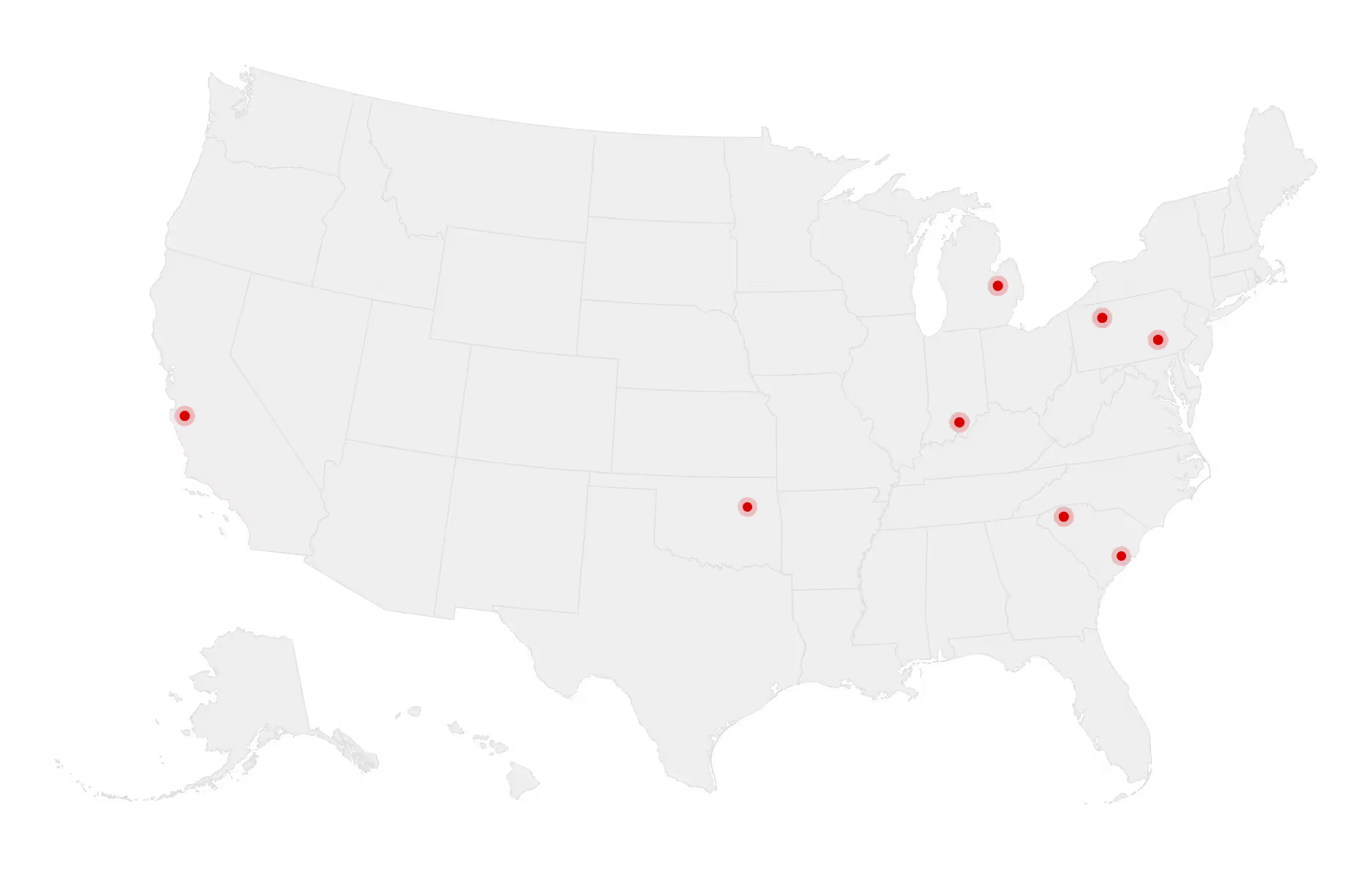
Jeffersonville, Indiana

Idemitsu Lubricants America’s commitment to our customers drives our desire to understand and respond to your needs. We exceed your requirements by taking design to the molecular level, developing unique lubricants technology and improving the performance, energy efficiency, and environmental impact of the lubricants you use.
1991

Founded

230+

Employees

30
MG

Volume

Sustainability

Caring for Our Environment with Future Generations at the Forefront

We continuously contribute to the realization of a sustainable society based on our deep respect for human beings as stated in our Principles of Management.

The Idemitsu Advantage

Global R&D Centers Highlight Idemitsu’s Commitment to Continuous Innovation

Hands On Research

We provide an in-depth consultation to establish your baseline lubrication challenges and discuss possible technology challenges in the future. Your consultation includes GENBA (at the source) on site machining evaluations as well as interviews with your engineers and operators.

Precise Selection and Design

We choose only the highest quality ingredients selected to address your unique lubrication needs. After considering each aspect of your machining process, we design a formula that provides superior friction control and longer lasting quality.

In Depth Evaluation and Analysis

Once your product has been formulated, we will simulate your actual lubrication conditions in order to evaluate and analyze the product's performance.

Join the Idemitsu Community!

Reach out to us

Experience precision performance.

Contact us to learn how Idemitsu Lubricants can be your preferred solution.

Understanding Motor Oil Standards

With More than 110 Years of Experience in Lubrication, We Have the Expertise and Know-How to Keep Your Operation Running Smoothly

This guide explores the key standards governing motor oil, focusing on SAE viscosity grades, API performance standards, and ILSAC fuel efficiency benchmarks.

SAE Viscosity

The SAE number indicates the viscosity grade of the oil (e.g., 0W-20) as defined by the Society of Automotive Engineers (SAE). The first number with the “W” after it indicates its viscosity in winter conditions/temperature. The second number indicates its viscosity at operating temperature.

API Standards

API standards are petroleum standards established by the American Petroleum Institute (API). Gasoline engine oils are categorized by the letter “S” (Spark Ignition) followed by a second letter (e.g., SJ, SL, SM, SN, SN Plus, SP) which indicates each round of performance enhancements. The higher the second letter, the higher the oil performance. For example, SN offers higher performance than SM. The latest standard (SQ) came into effect in March 2025.

The API Service Symbol “Donut” certifies that the oil meets indicated API quality and performance standards. It can only be displayed on oil products that meet Engine Oil License Certification System (EOLCS) standards established by API, SAE, and the American Society for Testing and Materials (ASTM).

ILSAC Standards

ILSAC standards combine API and fuel efficiency standards. The highest ILSAC oil grade is currently GF-7, which offers SQ performance (by API standards) and excellent fuel efficiency. International Lubricant Standardization and Approval Committee (ILSAC) was founded by American Automobile Manufacturers Association (AAMA) and Japan Automobile Manufacturers Association (JAMA) to establish, update, and maintain common quality standards for oil.

Understanding Motor Oil Standards

With More than 110 Years of Experience in Lubrication, We Have the Expertise and Know-How to Keep Your Operation Running Smoothly

This guide explores the key standards governing motor oil, focusing on SAE viscosity grades, API performance standards, and ILSAC fuel efficiency benchmarks.

SAE Viscosity

The SAE number indicates the viscosity grade of the oil (e.g., 0W-20) as defined by the Society of Automotive Engineers (SAE). The first number with the “W” after it indicates its viscosity in winter conditions/temperature. The second number indicates its viscosity at operating temperature.

API Standards

API standards are petroleum standards established by the American Petroleum Institute (API). Gasoline engine oils are categorized by the letter “S” (Spark Ignition) followed by a second letter (e.g., SJ, SL, SM, SN, SN Plus, SP) which indicates each round of performance enhancements. The higher the second letter, the higher the oil performance. For example, SN offers higher performance than SM. The latest standard (SQ) came into effect in March 2025.

The API Service Symbol “Donut” certifies that the oil meets indicated API quality and performance standards. It can only be displayed on oil products that meet Engine Oil License Certification System (EOLCS) standards established by API, SAE, and the American Society for Testing and Materials (ASTM).

ILSAC Standards

ILSAC standards combine API and fuel efficiency standards. The highest ILSAC oil grade is currently GF-7, which offers SQ performance (by API standards) and excellent fuel efficiency. International Lubricant Standardization and Approval Committee (ILSAC) was founded by American Automobile Manufacturers Association (AAMA) and Japan Automobile Manufacturers Association (JAMA) to establish, update, and maintain common quality standards for oil.

Understanding Motor Oil Standards

With More than 110 Years of Experience in Lubrication, We Have the Expertise and Know-How to Keep Your Operation Running Smoothly

This guide explores the key standards governing motor oil, focusing on SAE viscosity grades, API performance standards, and ILSAC fuel efficiency benchmarks.

SAE Viscosity

The SAE number indicates the viscosity grade of the oil (e.g., 0W-20) as defined by the Society of Automotive Engineers (SAE). The first number with the “W” after it indicates its viscosity in winter conditions/temperature. The second number indicates its viscosity at operating temperature.

API Standards

API standards are petroleum standards established by the American Petroleum Institute (API). Gasoline engine oils are categorized by the letter “S” (Spark Ignition) followed by a second letter (e.g., SJ, SL, SM, SN, SN Plus, SP) which indicates each round of performance enhancements. The higher the second letter, the higher the oil performance. For example, SN offers higher performance than SM. The latest standard (SQ) came into effect in March 2025.

The API Service Symbol “Donut” certifies that the oil meets indicated API quality and performance standards. It can only be displayed on oil products that meet Engine Oil License Certification System (EOLCS) standards established by API, SAE, and the American Society for Testing and Materials (ASTM).

ILSAC Standards

ILSAC standards combine API and fuel efficiency standards. The highest ILSAC oil grade is currently GF-7, which offers SQ performance (by API standards) and excellent fuel efficiency. International Lubricant Standardization and Approval Committee (ILSAC) was founded by American Automobile Manufacturers Association (AAMA) and Japan Automobile Manufacturers Association (JAMA) to establish, update, and maintain common quality standards for oil.